Healing the Land: How Adaptive Grazing and Nature’s Keystone Species Can Stop Chemical Runoff and Restore Our Soils
April 20, 2026
New World Screwworm
July 20, 2026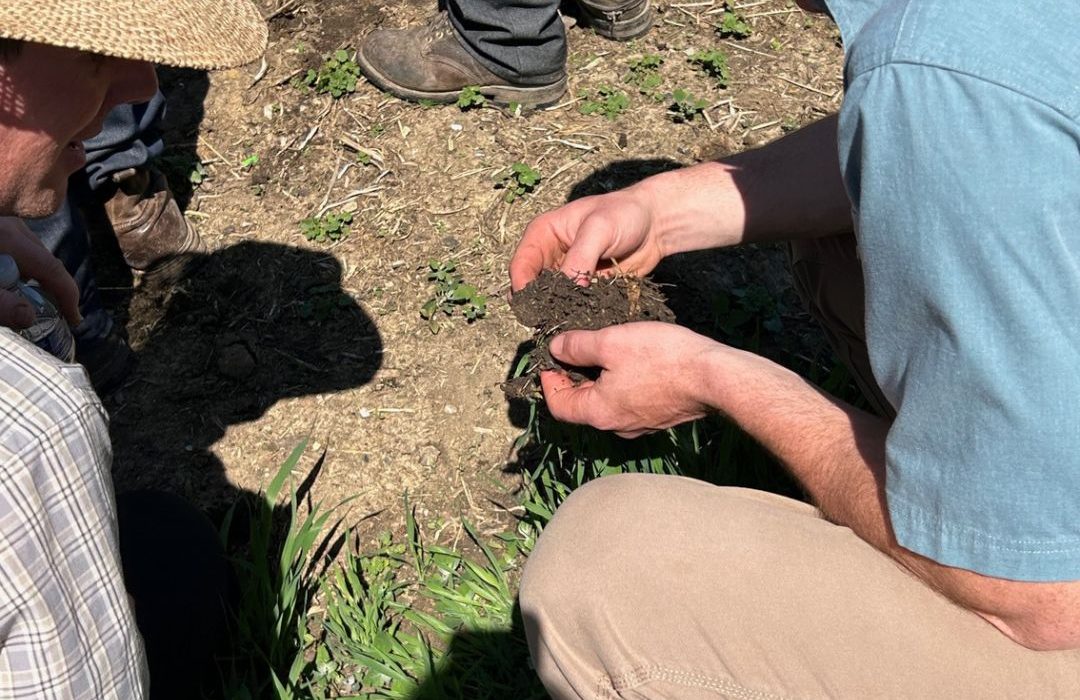
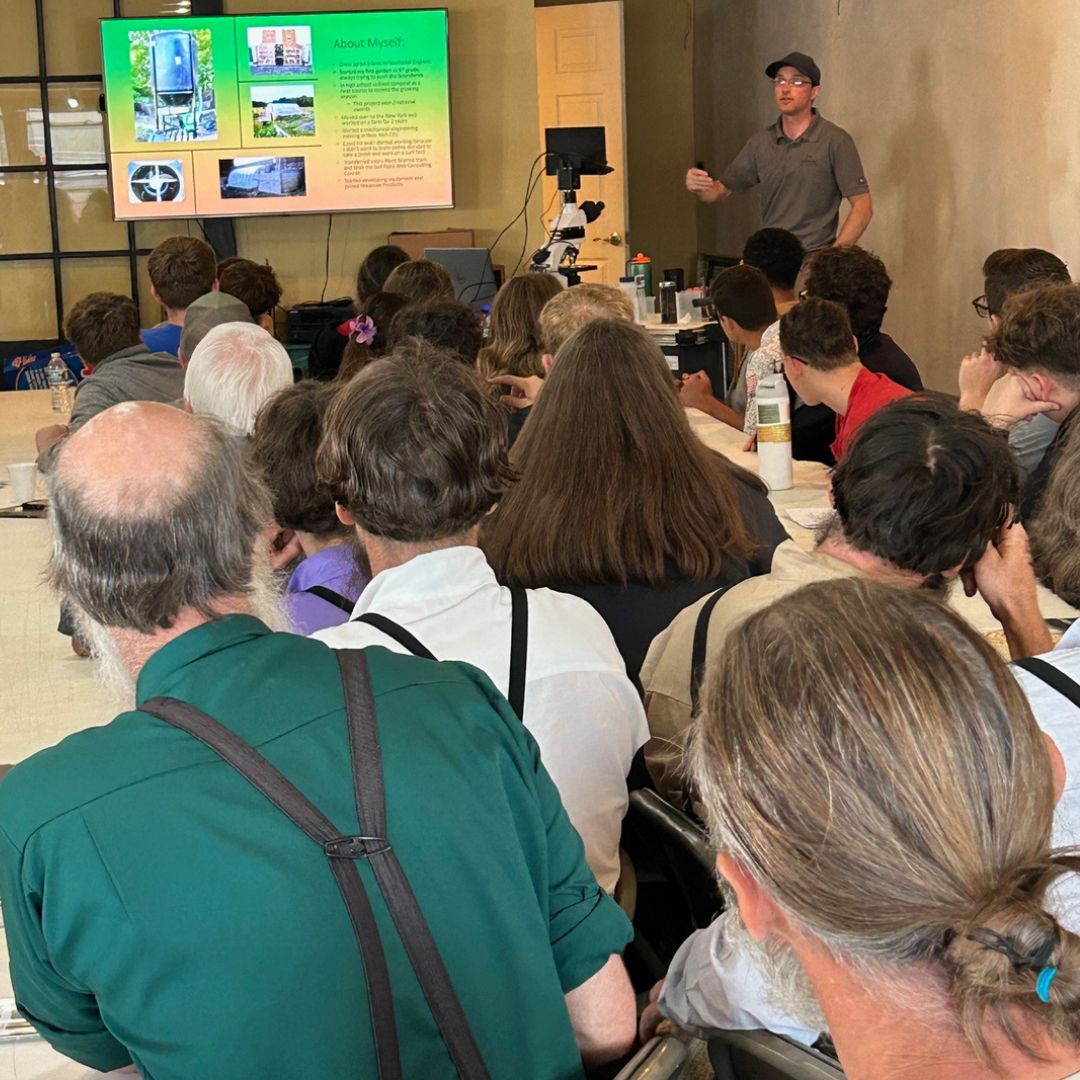
On April 16th, MOA had the pleasure of partnering with Hiwassee Products and Stark Naked Poultry to host a soil health field day for 100 attendees in the small town of Ewing, MO. We started the day at the community center, in the heart of a town that boasts a population of around 400 people. From seasoned farmers to soil health professionals to middle school students to NRCS employees, the room was full of people ready to learn—arriving by the van full, with pockets holding samples of soil and compost from their farms and open minds ready to learn.
A Microscopic Look
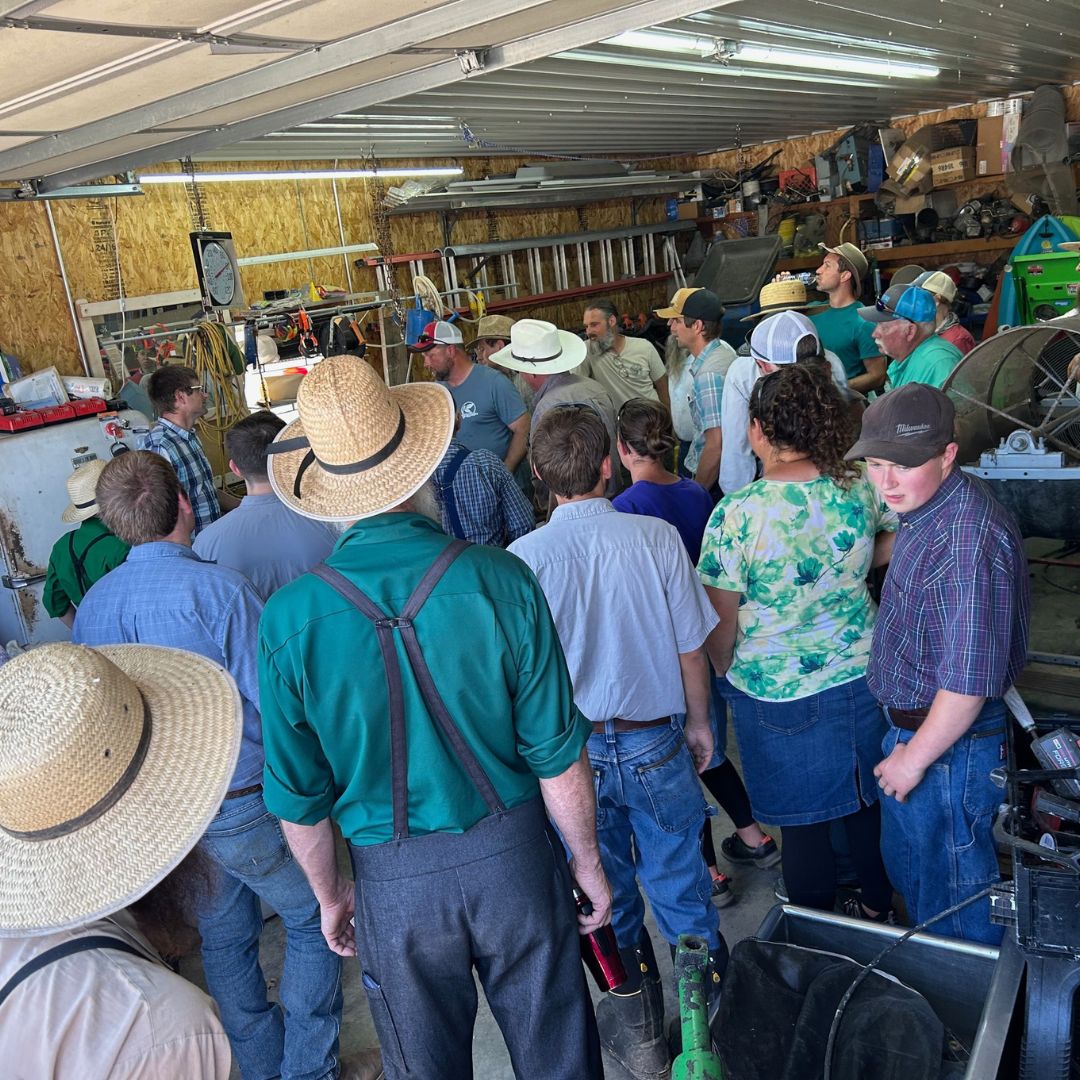
Practice backed by science gains trust faster. Simeon Kliensasser kicked off the day with a deep dive into the science of soil structure, microbes, and fungi—and their role in plant health. He also covered the impact of improving microbial life on your farm for both production and profit. As we worked through the slides, attendees raised questions about practical application. Following this, Simeon shared a microscopic look at different compost and soil samples provided by Hiwassee Products, as well as samples brought in from farms across the state.
How It’s Made
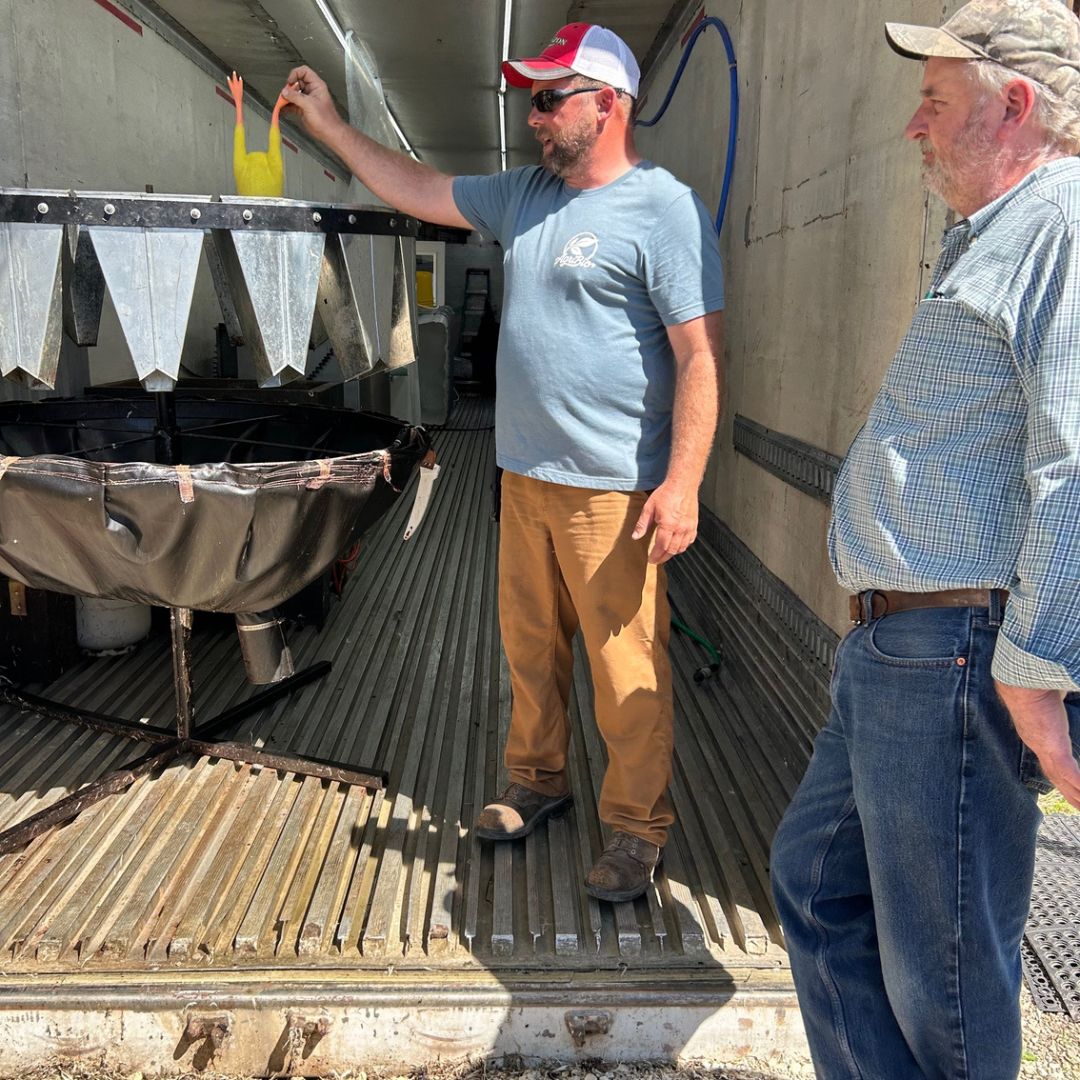
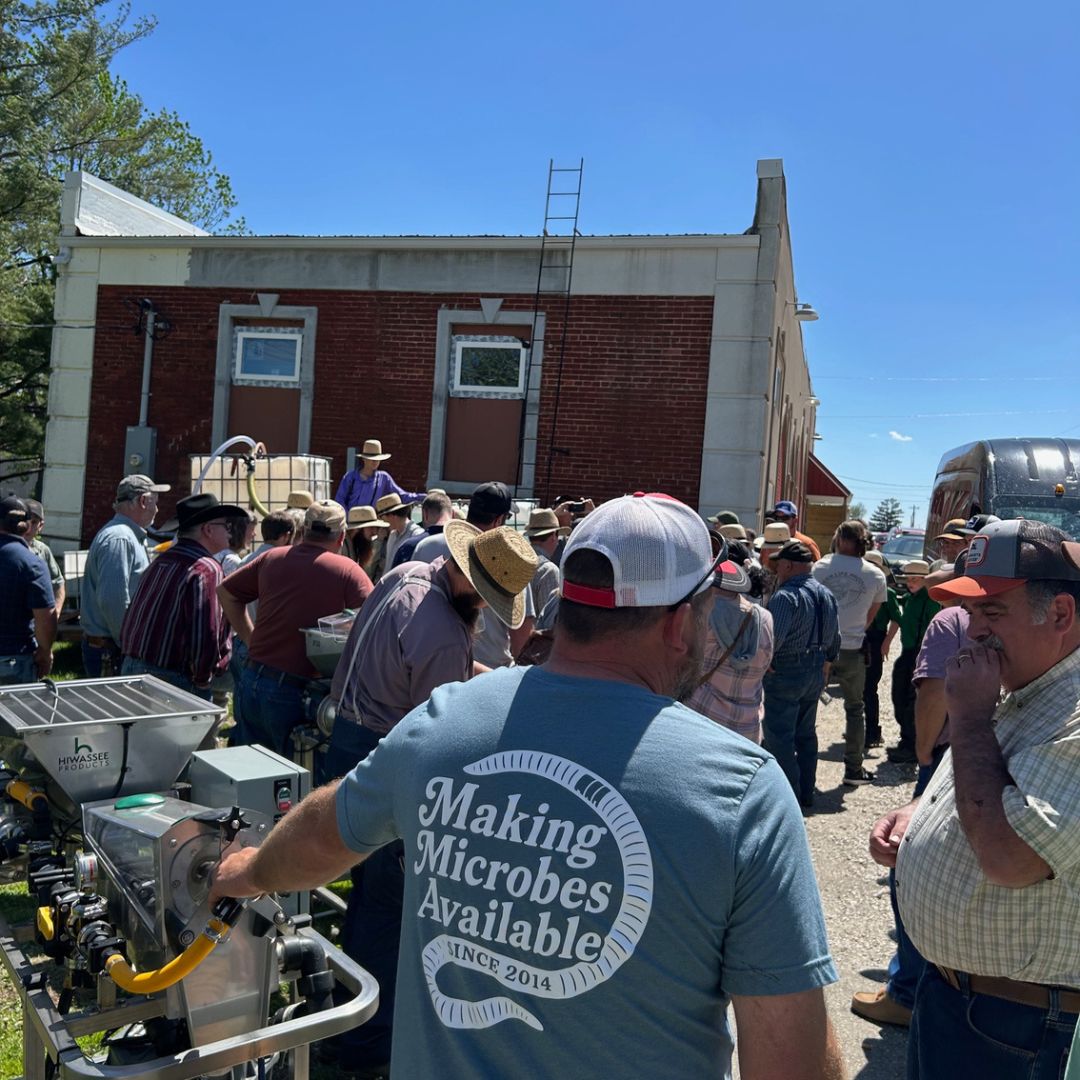
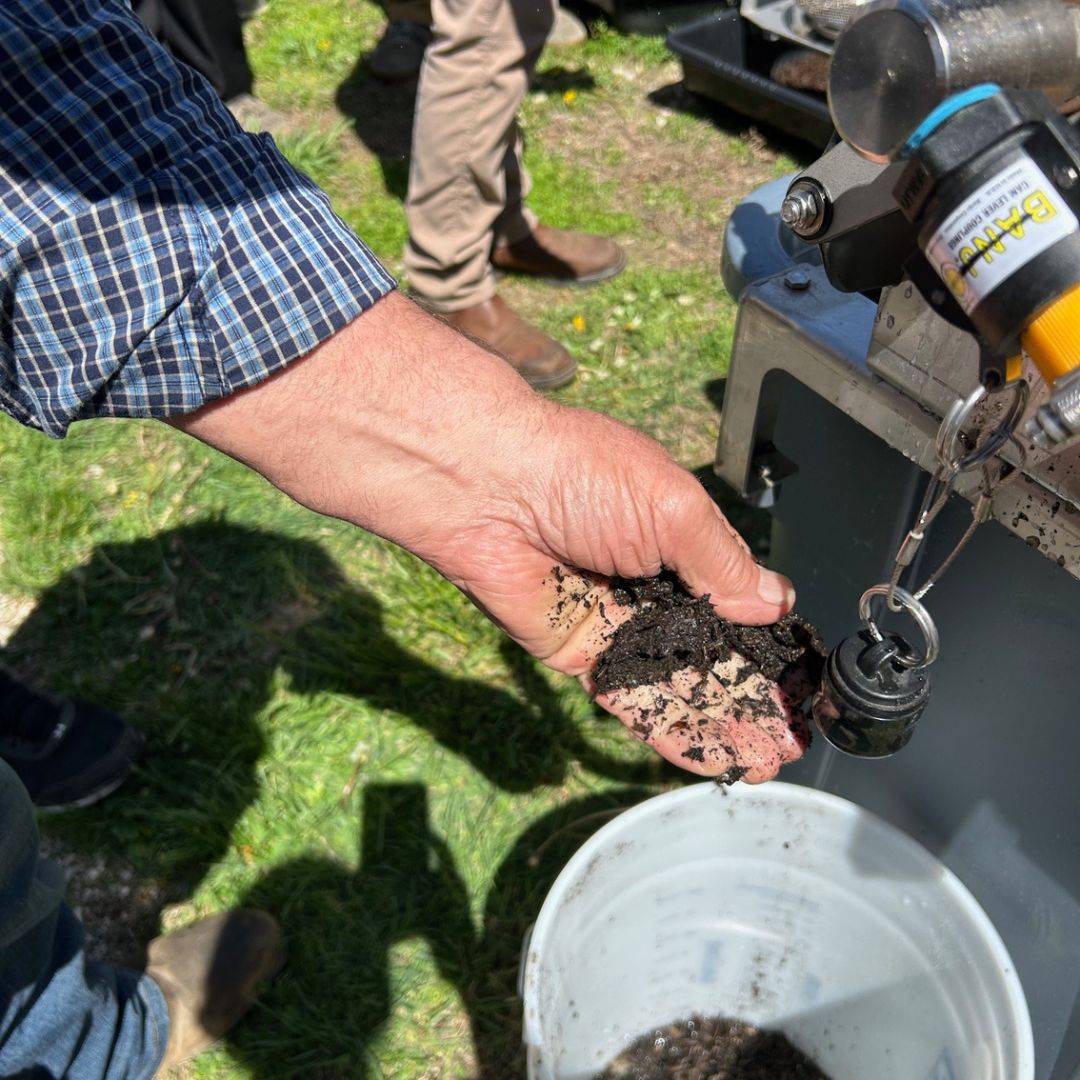
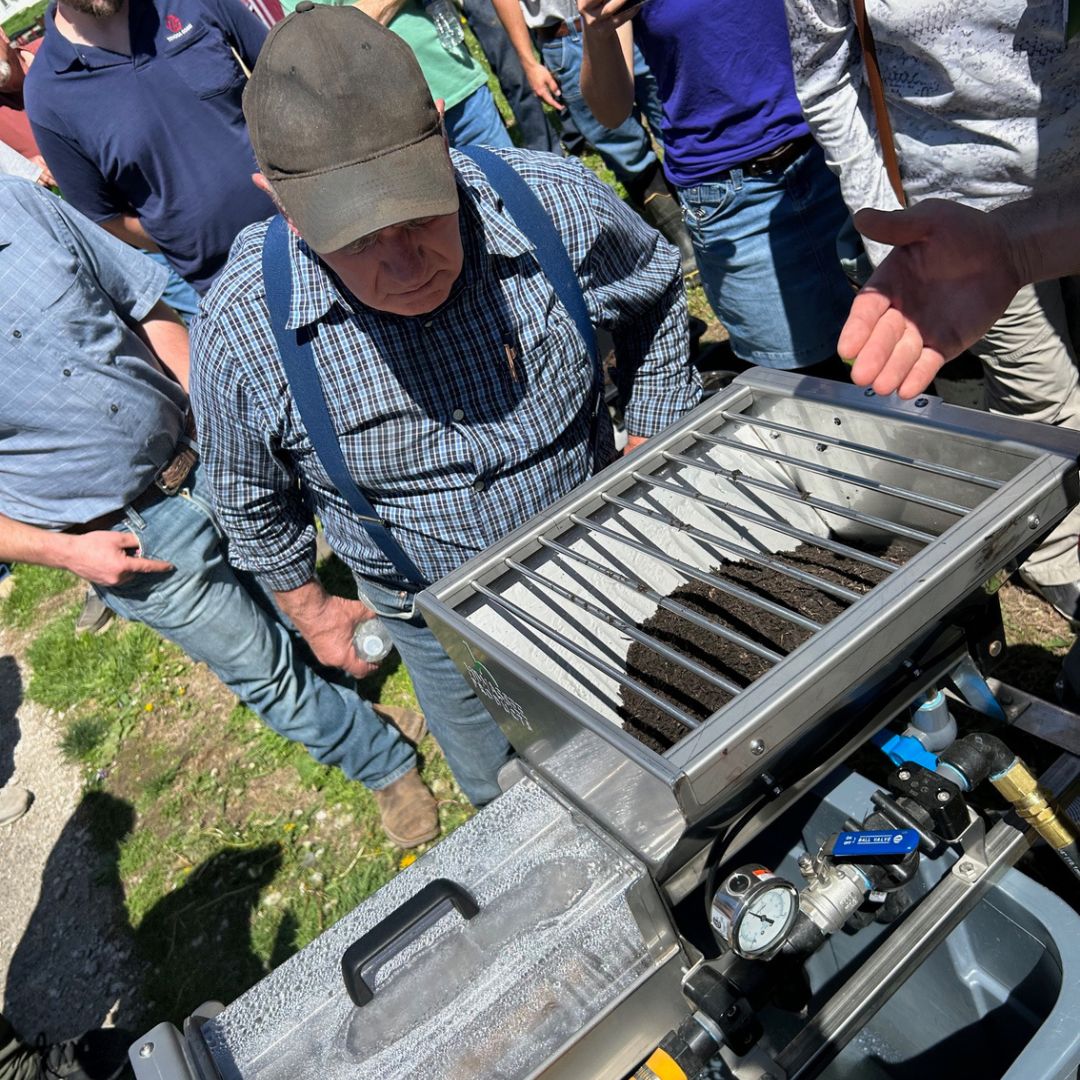
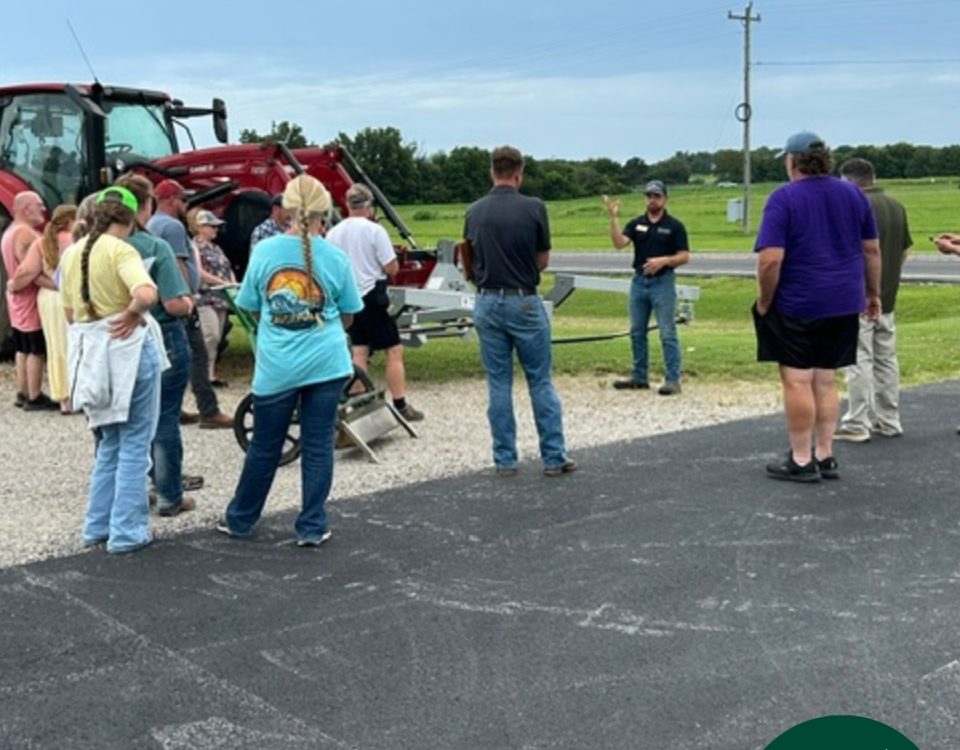
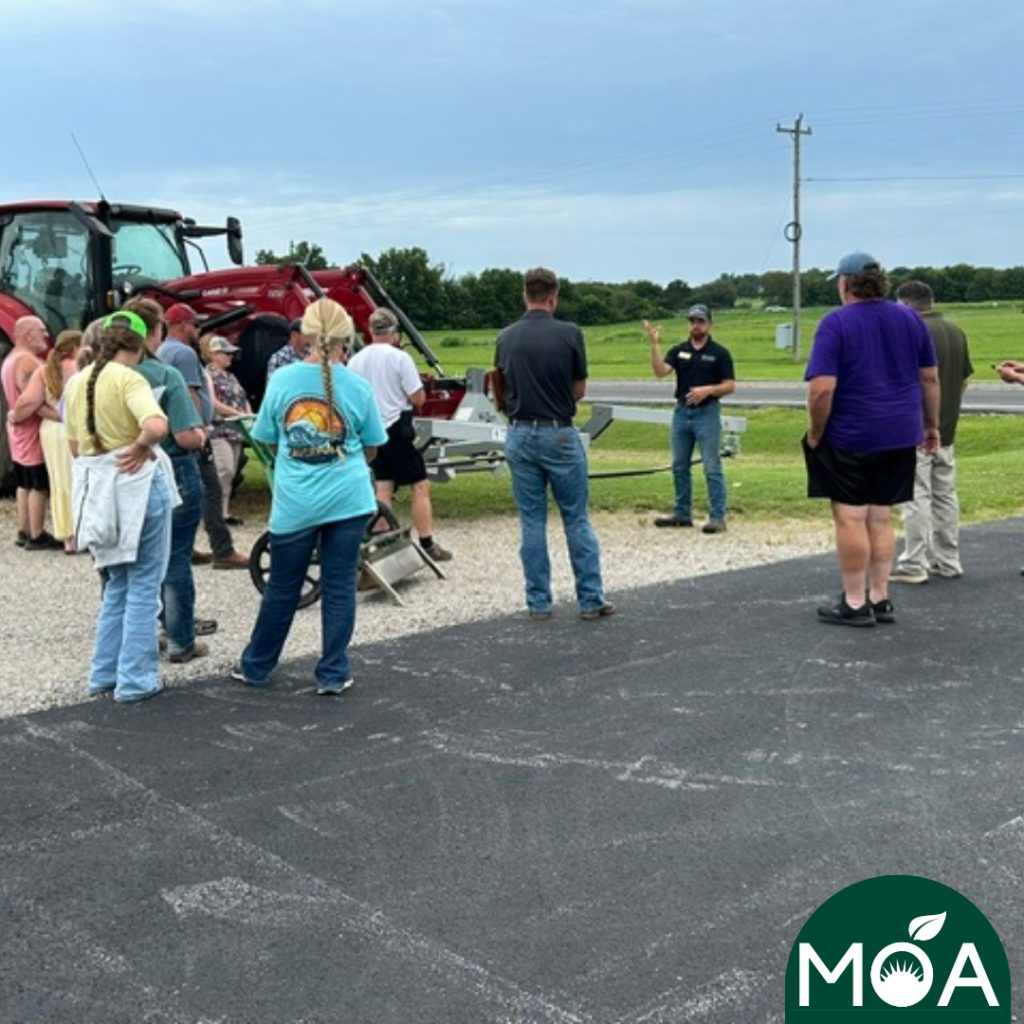
Compost is nothing new to growers, but getting the most out of it is always the goal. After lunch, we headed outside to look at vermicomposting equipment as well as different types of compost extractors. In action, we were able to sift compost and add it into an extractor so attendees could see how much liquid could be produced in an hour. Attendees had questions about water pressure, application rates, and what to do with compost after it goes through the extraction process (the answer—add it back to the pile).
The idea behind this extraction process is that you run water and compost through an auger system, much like making fresh vegetable juice. The liquid that comes out is full of nutrients and microbes and can be applied via sprayer to your fields. The pulp is nearly dry and can be added back into your compost system to break down even further—ultimately helping reduce input costs.
Macroscopic Look
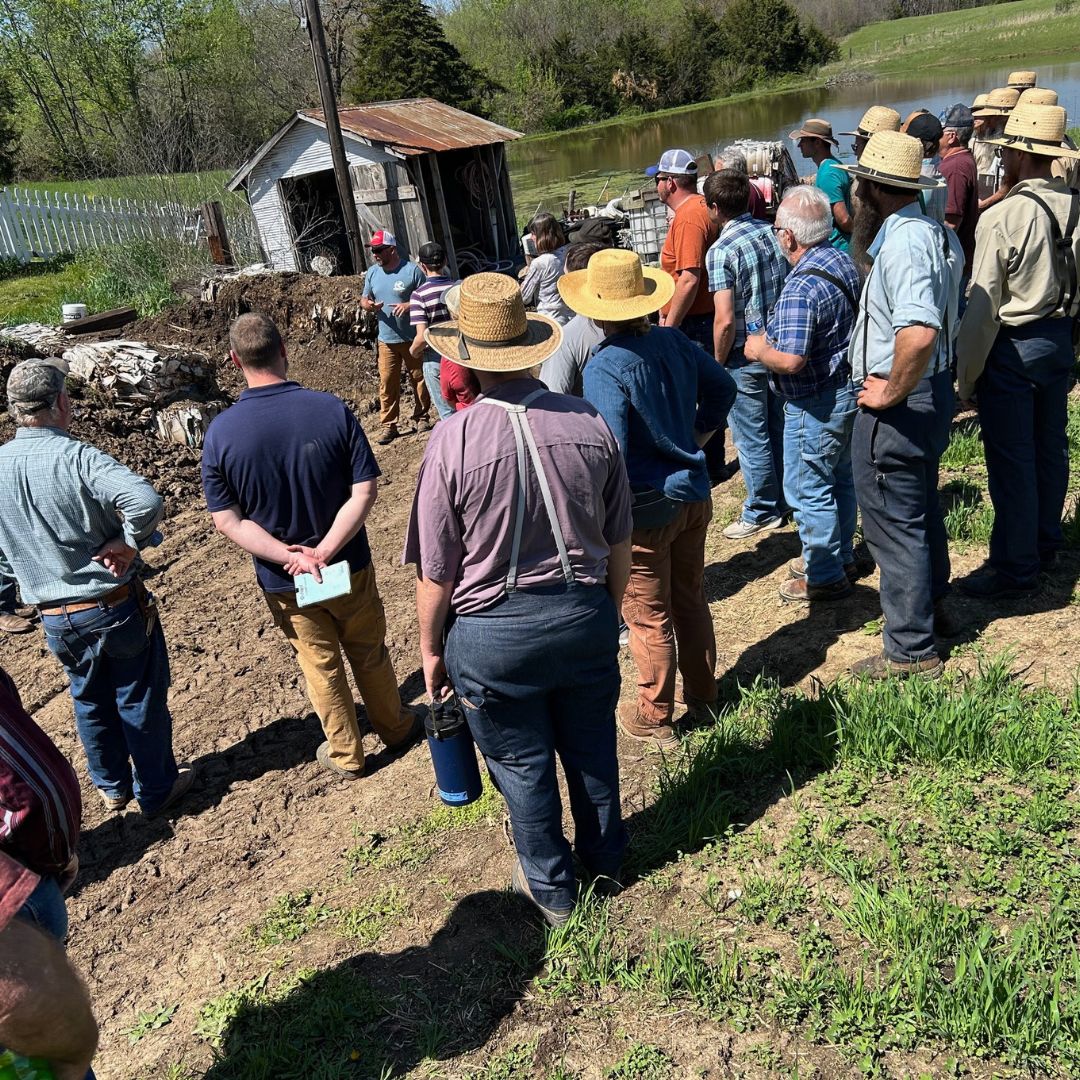
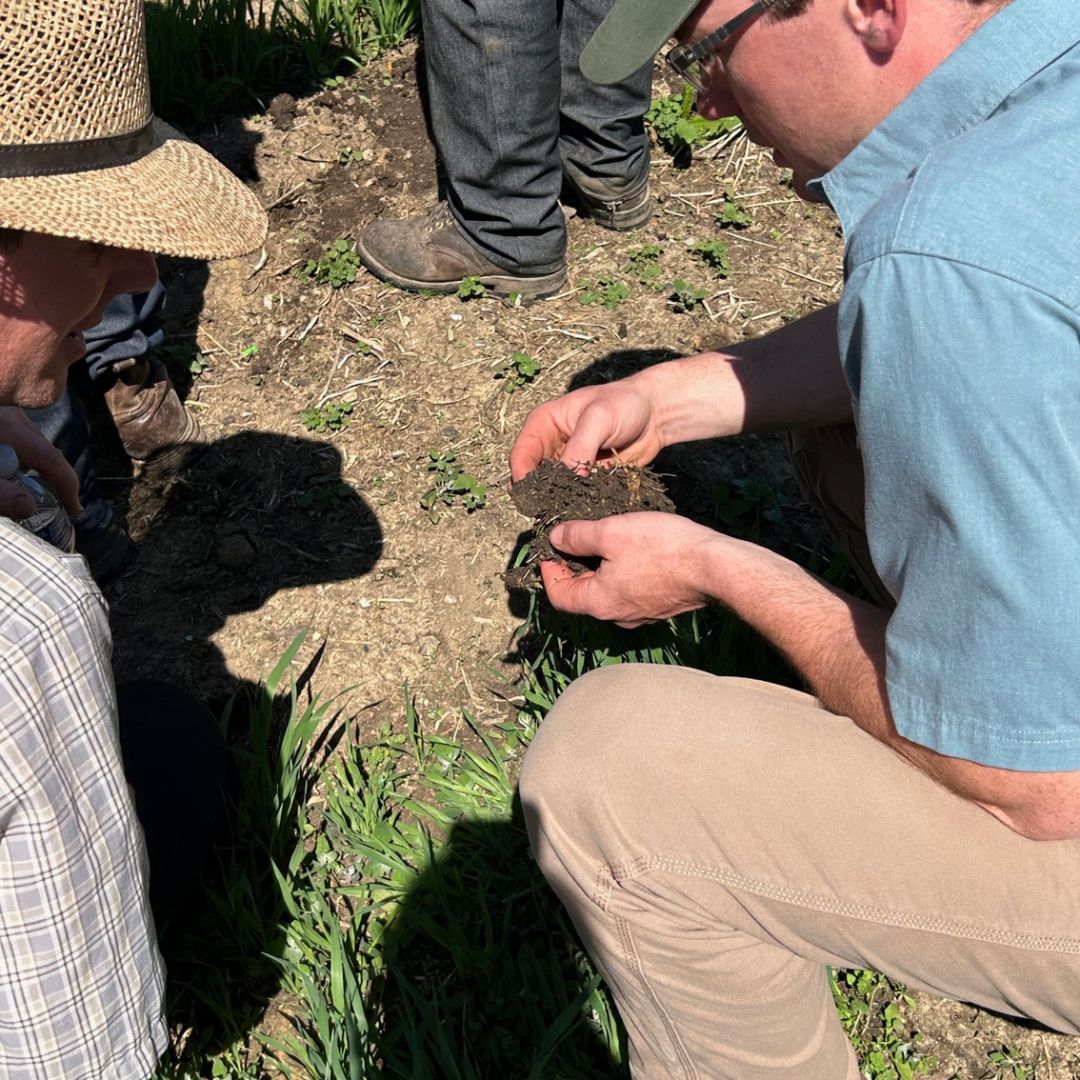
So what does this look like in real life? We toured Andrew Stark’s farm, where composting is one of many regenerative, cost-saving practices on his poultry operation. We were able to see his composting system, dig into his soil, and get a look at how he utilizes on-farm resources to make vermicompost on site. Then we headed to the field, where his flocks move daily, spreading nitrogen-rich fertilizer before returning to his on-site processing facility.
Closing the Loop
While we saw attendees from across the state who made the trip because they are already familiar with these practices, many in attendance were invited by Stark and came because he is a trusted neighbor and pillar in the community. What we heard from so many people was inspiring, ranging from, “I’ve never really thought about this before, and I’m excited to keep learning,” to, “I can’t wait to put this into practice on my farm.” This reflects a broader trend we are seeing—more and more producers are exploring regenerative practices because they see real-world benefits, from improved soil and crop health to a stronger bottom line.
MOA is thankful to Hiwassee Products for providing meaningful education, to Andrew Stark for opening his farm and bringing in his community, to AgriBio Systems for sharing their knowledge, and to Practical Farmers of Iowa for sponsoring this event. It is through outreach days like these that we can continue to drive the mission of MOA forward.
Written by: Grace Ames, Communication & Membership Manager