A Day in the Field
April 14, 2026
Micro to Macro: Small Changes Lead to Big Impacts
April 28, 2026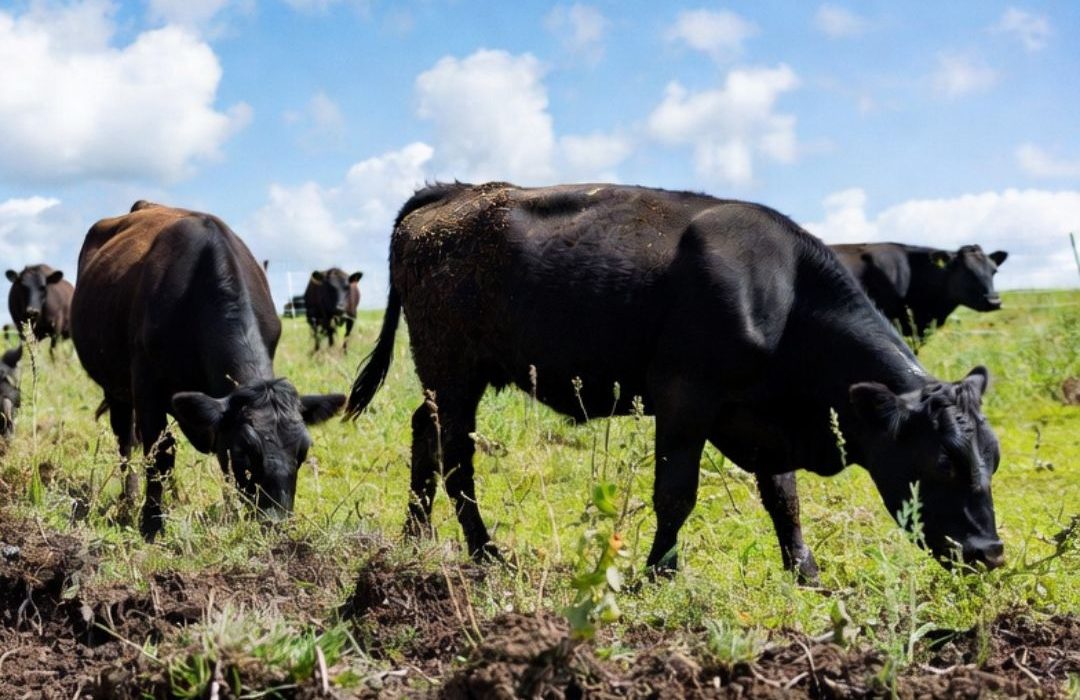
Across America’s farmlands and rangelands, chemical fertilizers, pesticides, and nutrient-laden manure often wash off compacted, degraded soils into streams, rivers, and ultimately the Gulf of America (Mexico), fueling harmful algal blooms and dead zones. In places like Iowa, nitrate runoff from row-crop and livestock systems contributes significantly to pollution of the Mississippi River. Yet regenerative practices that rebuild living soils offer a practical path forward. Adaptive Multi-Paddock (AMP) grazing with cattle, and the inspiring lessons from large-scale bison rewilding, show how mimicking natural herd behaviors can turn land into a sponge that holds water and nutrients in place, slashing the need for synthetic inputs.
What Is AMP Grazing?
AMP grazing moves livestock in high-density groups through many small, temporary paddocks (often created with portable electric fencing) for very short periods, hours to a day or two, before giving the land extended recovery time. Managers adapt moves daily based on forage growth, weather, and observation rather than following a rigid calendar. Animals graze roughly half the plants and trample the rest, incorporating manure and urine evenly while stimulating soil biology.
This approach contrasts sharply with continuous grazing, where animals linger and selectively overgraze preferred plants, leaving bare or weedy patches that erode easily.
Real-World Wins from AMP Grazing
Farmers and researchers have documented clear benefits:
Gabe Brown’s Ranch, North Dakota: Starting with depleted soils (organic matter ~1.7–1.9%, infiltration <0.5 inches/hour), Brown integrated adaptive grazing, cover crops, and no-till. Over 20+ years, soil organic matter climbed to 5.3–7.9%, and water infiltration soared to over 30 inches per hour in tests. Runoff virtually disappeared, even during heavy rains, while carrying capacity increased dramatically and synthetic fertilizer/herbicide use dropped sharply.
Southeastern U.S. Paired Ranch Studies: AMP-managed pastures showed 13% more soil organic carbon and 9% more nitrogen than neighboring continuous-grazing operations. These gains improve nutrient cycling, reducing the need for added fertilizers that otherwise run off.
Texas Multi-Paddock Research (Richard Teague et al.): On tallgrass prairie sites, adaptive systems cut surface runoff by 40–48% while boosting subsurface flow. Healthier soil structure led to better water retention, less erosion, and improved nutrient retention, protecting waterways from pollutants.
Broader Patterns: AMP often increases soil carbon sequestration (e.g., 0.957 Mg C/ha/yr in some Canadian studies), enhances microbial activity, and can save ranchers tens of thousands of dollars annually on inputs as biology takes over. In the Midwest, similar rotational approaches on CRP land or pastures have boosted active carbon, microbial respiration, and organic matter while cutting erosion risks.
These changes create “soil sponges” that soak up rain, cycle nutrients naturally, and keep chemicals where they belong—on the land supporting productive forage or crops.
Nature’s Masterclass: The Texas Bison Story
Viral accounts describe releasing thousands of Plains bison onto ~150,000 acres of degraded Texas Panhandle land in 2019, land scarred by selective cattle grazing, mesquite invasion, compaction, and a falling water table. Within 1–2 years, dramatic shifts reportedly occurred: mesquite cover dropped by ~30% in active zones, native grass cover jumped from ~30% to 65%, soil compaction eased by ~40%, and “ghost” seeds germinated in fertilized wallows. Water tables rose (some reports cite 3.5 feet), streams began flowing again, insect diversity exploded, and wildlife returned in force.
While these specific large-scale numbers blend documented principles with inspirational storytelling (real Texas bison efforts, like the genetically unique Southern Plains herd at Caprock Canyons State Park or tribal projects, operate on smaller scales with steady gains in grass diversity and habitat), the underlying ecology is sound. Bison act as keystone engineers: they graze more indiscriminately than cattle, create wallows that capture and infiltrate water, trample biomass into soil, and distribute massive amounts of manure/urine. Their mobile, high-impact herds mimic the intense but brief grazing followed by long recovery that built the original prairies.
Bison reintroductions elsewhere (including Indigenous-led efforts) consistently show improved plant diversity, soil aeration, and water retention compared to cattle-only systems, reinforcing the case for mimicking their behaviors.
Connecting the Dots: From Texas Bison to Iowa Pastures
The bison example is essentially “wild AMP” at the landscape scale. Both systems succeed by:
-
Concentrating on animal impact briefly.
-
Allowing full plant recovery.
-
Feeding soil microbes with trampled residue and excreta.
-
Building a structure that infiltrates water instead of shedding it (and attached pollutants).
In Iowa’s context, with tiled fields, heavy spring rains, and nitrate concerns, adopting AMP on pastures, cover crops, or integrated crop-livestock systems can reduce runoff while maintaining or boosting productivity. Local efforts through groups like Practical Farmers of Iowa demonstrate rotational grazing’s role in building organic matter and cleaner water on former row-crop or CRP land.
Getting Started: Practical Steps Before Scaling AMP
AMP (or bison-inspired management) isn’t instant. Success requires preparation:
1. Learn and Observe — Study principles via mentors, books like Dirt to Soil, or networks. Shift to daily monitoring of grass, soil, and weather.
2. Assess Your Land — Soil test for nutrients/organic matter; map forage, water sources, and limitations.
3. Plan Infrastructure — Invest in portable electric fencing and reliable water (troughs, pipes) for every paddock or two. Start small on a test area.
4. Set Realistic Goals and Stocking Rates — Base density on your rainfall and forage; plan for a possible short transition dip.
5. Reduce Inputs Gradually — Use soil biology to wean off synthetics as carbon and microbes rebuild.
Many producers see visible soil improvements in 1–3 years and economic/ environmental payoffs within 5+.
A Resilient Future for Water and Soil
From Gabe Brown’s North Dakota transformation to Texas multi-paddock research and the powerful imagery of bison restoring prairies, the message is consistent: healthy soils, built through adaptive, biology-driven grazing, naturally filter and retain nutrients, cutting chemical dependency and runoff. Whether using cattle in managed AMP systems or drawing lessons from wild bison herds, these approaches turn problems into assets: more productive land, cleaner water, greater resilience to drought or heavy rain, and often higher profitability.
For Iowa farmers facing water quality pressures, the tools are accessible and proven. Start small, observe closely, and let the land’s biology do more of the work. The same principles healing Texas rangelands can protect Midwest watersheds—one paddock, one move, one improved inch of topsoil at a time.
Written by and shared with permission of: David N. Ford
To read more from David, find him on Substack HERE